
C70 Fullerene Crystal Structure
One of the reasons that the discovery of C60 the buckminsterfullerene carbon structure was so important is that it revealed a whole new way that carbon can make solid structure, which is why we included it in the Crystal Explorer Kit teaching booklet. But one of the big discoveries was that from the C60 molecule, more structures could be made! Here we're going to outline how you can turn your C60 molecule into a bigger C70 one.
To do this we recommend you make the C60 molecule first.
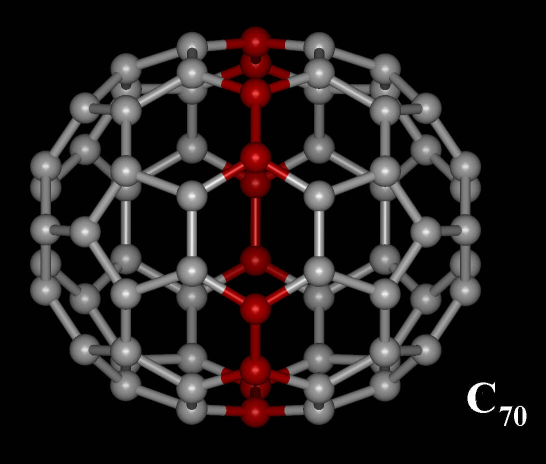
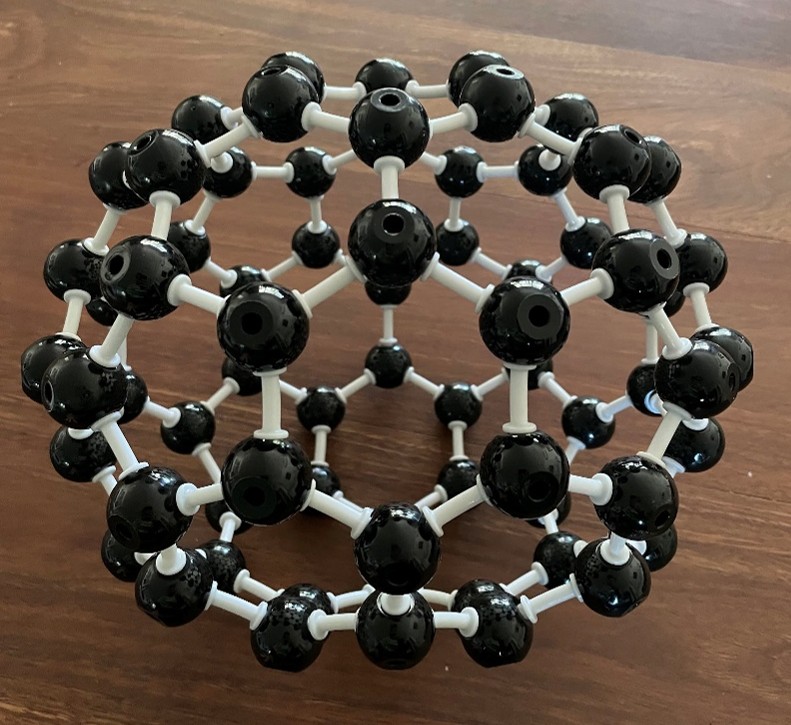
The C70 molecule you can make has 37 faces (25 hexagons and 12 pentagons). Its structure is similar to that of C60 molecule (20 hexagons and 12 pentagons), and each carbon atom in the structure is connected with 3 others, but C70 has a belt of 5 hexagons inserted at the equator (the bit round the middle) – when you have built this, can you reconise this?
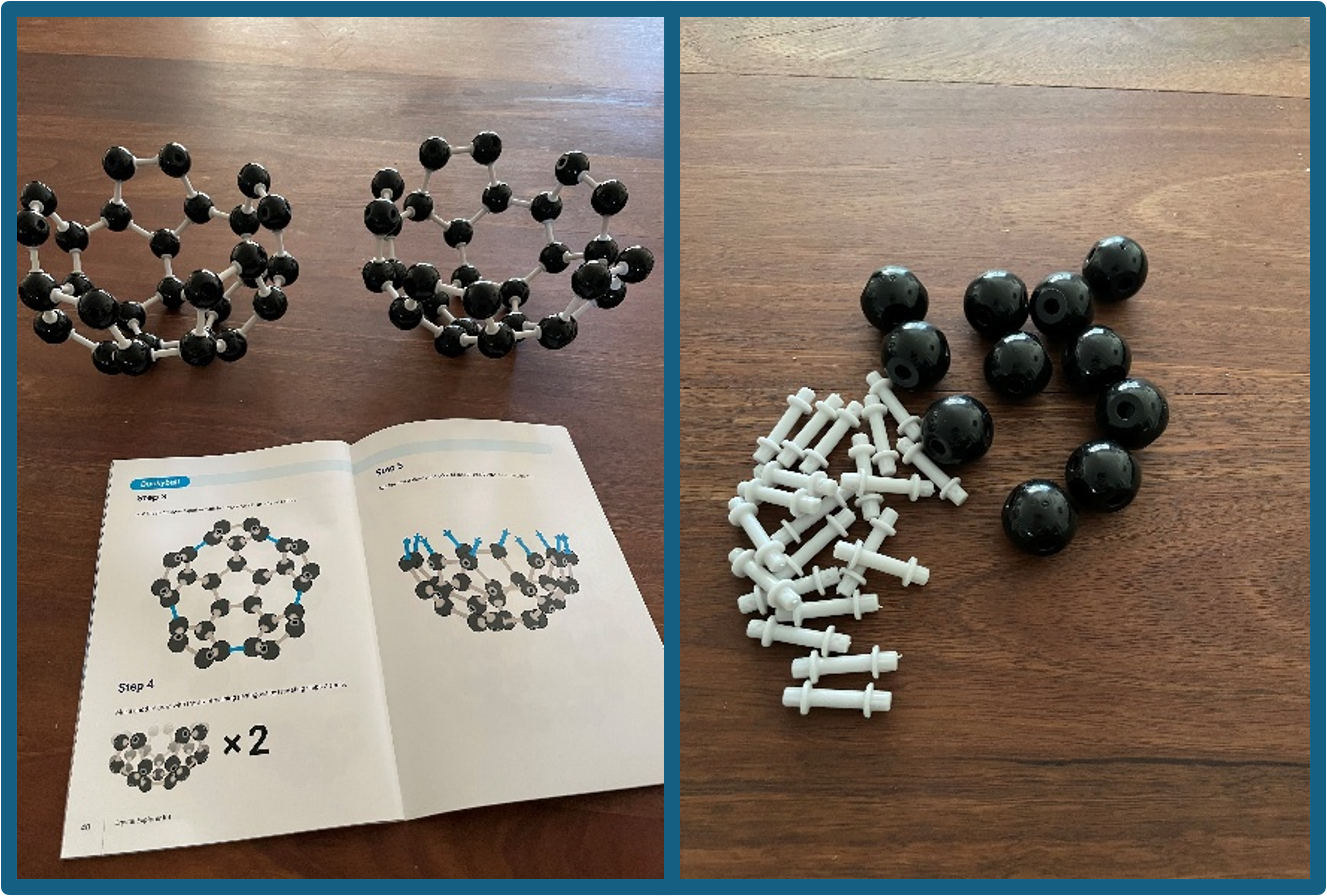
What you will need
A crystal explorer kit and instruction booklet
Two ‘bowls’ from the buckyball instructions – up to step 4 on page 40.
10 additional carbon atoms and 25 extra bonds
How to make it
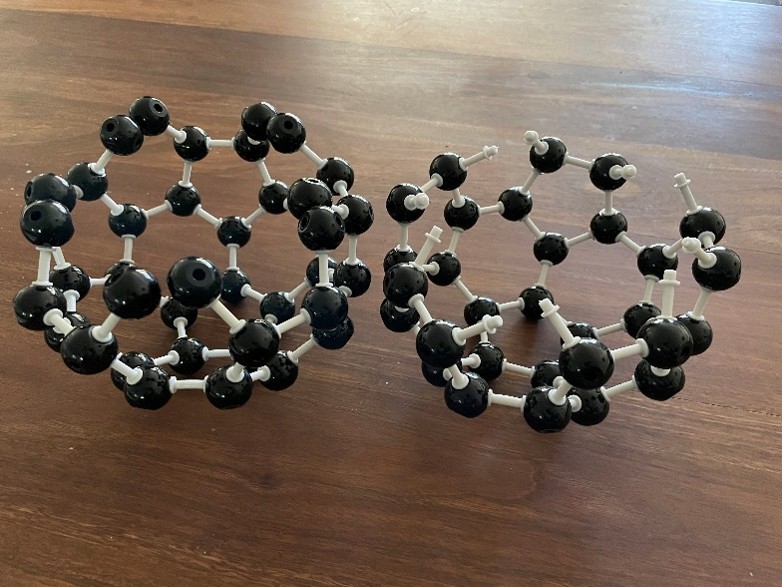
Follow step 5 of the instructions with the bowls and add ten new bonds to each of the edges. Then to one of the bowls pop a carbon atom on each of the bonds. The two bowls will look different now, one a bit larger like the one on the left in the picture.
Now join the bowls together including the extra carbon atoms. The join is similar to that from the buckyball in that all the atoms you are connecting will eventually be hexagons. You will still have 5 bonds left over after you’ve joined them and your structure will sag a bit in the middle!
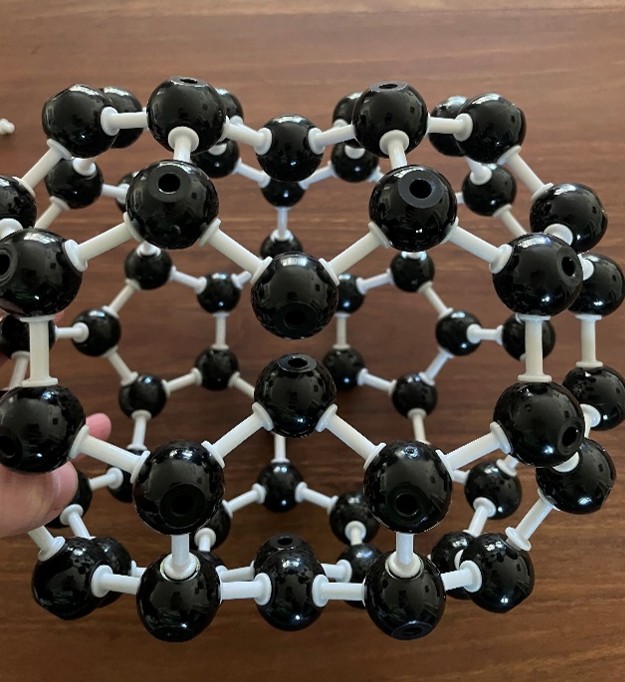
Last step is to take the last 5 bond and place them between the joined atoms so that you finish off the hexagon arrangement. The final structure will be closer to a footy ball than a soccer ball, and look like below:
Why is it interesting?
C70 molecules were part of the advent of nanotechnology, and their shape mean that along with C60 they have found lots of uses. Fullerenes are good electron acceptors which makes it useful in electronic applications such as solar cells which harness the sun's energy. It can undergo radical quenching reactions which are helpful in medicinal and biological applications. Fullerene can bond to transition metals, which is useful in the catalysis of reactions. Its spherical shape results in unique properties that can be exploited in biomedicine and as a lubricant